



March 18, 2026
“A patient is not just a gallbladder or heart attack or hip surgery – they are a person with feelings and a family and fears,” says Debbie Tomlinson, DNP. This philosophy has been at the core of Debbie’s care for patients from the beginning of her time in nursing.
Debbie’s 50-year career in nursing ended when she retired March 1, 2026 – a career that started when she was 16 as a nurse’s aide and ended as a nurse practitioner in the Emergency Department at Great Bend Campus.
However, the seed of a career in nursing was planted even earlier. When Debbie was only 11, her mother received a diagnosis of metastatic lung cancer. Debbie often rubbed her mother’s back when her lungs bothered her, providing a small amount of relief.
Debbie recalls her mother saying, “Debbie, you are so gentle; you should go into nursing.”
After lung cancer took her mother at age 39, Debbie’s family – her father and 2 siblings – moved to Great Bend. The idea of nursing stayed with Debbie and led her to training as a nurse’s aide with the Dominican Sisters, who helped establish the first hospital in Great Bend in 1903.
“The Sisters taught us that taking care of patients was absolutely paramount,” Debbie says. “And caring for people as a whole is the reward of nursing for me.”
Learning as much as she could
After working as a nurse’s aide, Debbie earned her LPN and associate degree in nursing at Barton Community College. She knew she had more to offer, so she went to Kansas Newman College, now Newman University, in Wichita to earn her bachelor’s degree in nursing.
After earning her BSN, she was working in healthcare management and wanted to get back to direct patient care, so she earned her Master of Science in Nursing degree at Fort Hays State University, where she also taught nursing for more than 13 years. Wanting to maximize her education, she earned her Doctor of Nursing Practice from Rocky Mountain College of Health Professions in Utah.
“I wanted to go as far as I could in nursing to serve my community,” says Debbie. “I noticed that nurse practitioners could provide greater levels of patient care, and I knew I could be part of that. And as a nurse practitioner, I learned to care for a person holistically.”
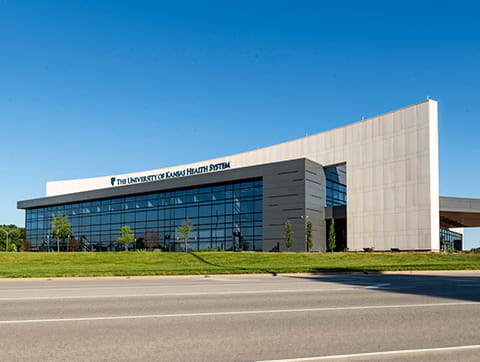
Another important point of being involved in medical care, Debbie says, is knowing that as the need for medical care in a community grows, people come together to make that happen. She says having The University of Kansas Health System in the community is an example of that.
“What the health system is doing here is so important for the community,” she says. “It provides opportunities for people to work in healthcare, stay in the community and grow in their career without having to leave.”
Leaving a legacy
Working in emergency care, Debbie says, is especially rewarding.
“Because of the intensity of the actual care required for the patient, you have to have a certain skill set, and you have to keep your skills current,” she says. “Working in the Emergency Department is fast-paced and always different.”
As she wraps up her career in nursing, she reflects on changes she’s seen over the years, as well as the influence she’s had on her family. Her daughter, Amanda Bickle, APRN, also works in emergency care at Great Bend Campus. Her granddaughter Alexis Bickle, 16, works as a nurse’s aide in acute care in the Great Bend Campus hospital. They travel more than an hour each direction to work for the health system. Alexis hopes to go to medical school at the University of Kansas.
“There are a lot of great things about nursing,” Debbie says. “I have a strong faith in God, so to be able to serve people at what might be the lowest time in their life has been such a blessing. I have been there when a new life comes into the world, and at other times I’ve been there as they took their last breath.”
Debbie’s time in nursing has been filled with learning, growth and caring. She says she’s learned about human nature and care team hierarchies and how to navigate them. But more than that, she’s been able to serve her community.
“It’s been a struggle to make the decision to retire,” she says. “But it’s less difficult knowing that I am leaving a legacy.”