





April 06, 2026
In pediatric healthcare, even the smallest moments can leave a big impression.
Our care team knows how fear, pain and uncertainty can negatively impact a child’s feelings about visiting their doctor. However, we also know that the right interventions can completely reshape that experience. This idea – that our pediatric team can reduce anxiety around procedures, such as vaccinations, and improve the overall well-being of our littlest patients – inspired the Comfort Measures Project. This initiative has been the most meaningful quality-of-care improvement in our pediatric locations.
What are comfort measures?
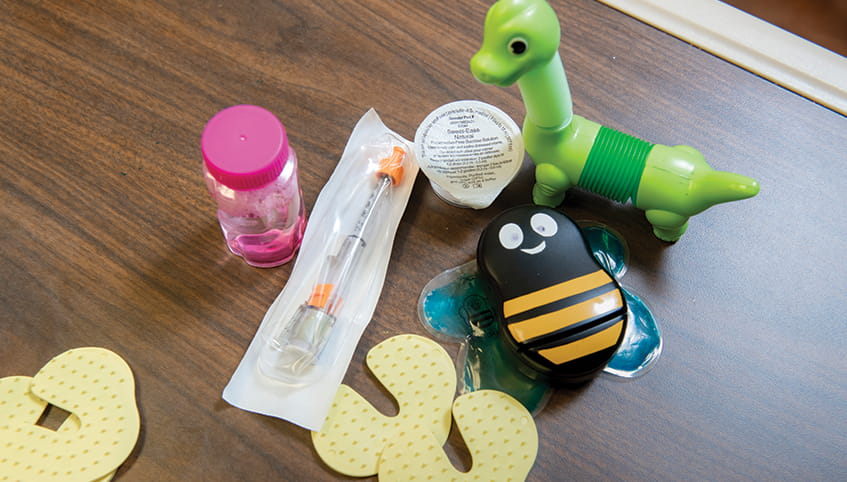
Comfort measures include tools and approaches that will lessen physical or emotional discomfort a child might experience during their appointment. We recognize that ensuring a child’s long-term health and wellness can sometimes come with a little short-term distress. For example, the benefits of vaccination outweigh the pain of a needle prick, but that doesn’t change the fact that the experience can be uncomfortable. So our team developed a comfort measures toolkit to address each child’s needs. We offer the following options.
Sensory and soothing tools
- Buzzy Bee – this vibrating device looks like a colorful bumblebee. It can be placed on the skin in the location of a shot to confuse nerves and distract from the pain of a needle prick. There’s also an optional ice pack.
- Shot blockers – these are pieces of plastic with bumps that are pressed around the injection site. By stimulating sensory nerves around the shot, the overall pain is lessened.
- Cold spray topical anesthetic – our team also calls this Spiderman or Elsa spray! This works for kids ages 4 and up to cool and gently numb the injection site.
- Sucrose – sweet sucrose on the tongue triggers the release of endorphins, which are natural painkillers.
Distraction techniques
Light spinners or music can be used to distract children for many purposes or can help put them in a more relaxed or playful mood.
Why do we use comfort measures?
When kids show up at their doctor’s office, they often come with worries about getting a shot, confusion around unfamiliar equipment or memories of previous difficult medical experiences. Our nursing team recognized a pattern: Distress wasn’t just uncomfortable in the moment; it impacted cooperation, trust and perceptions of healthcare long after the visit and even into the teen years for some children.
We wanted to change that.
By focusing on comfort, we aimed to:
- Reduce fear and anxiety during procedures
- Increase the sense of safety and control for patients
- Strengthen communication between families and care teams
- Support staff with tools that make procedures smoother and more positive
Comfort isn’t an extra. It’s a clinical intervention, and it’s a powerful one.
The results
Since implementing comfort measures, we’ve observed several encouraging outcomes.
- Reduced procedure-related distress in children across all age groups
- More efficient procedures due to improved cooperation
- Higher caregiver satisfaction, especially during immunization or lab draw visits
The positive feedback from families has been one of the most inspiring parts of the project. Parents tell us that the clinic experience feels more compassionate and child centered.
The success of this project has made it clear that when we prioritize emotional well being alongside clinical care, children thrive.
Learn more about our pediatric services.