




April 20, 2026
Kansas City’s heat and humidity can be a dangerous combination. If you are spending more time outside for summer activities or sporting events, it’s important to take steps to protect yourself and know how to identify the signs of a heat illness.
Stay safe
The most dangerous time of day is when the temperature is the hottest and the humidity is the highest. Our body’s natural defense against heat – sweating – doesn’t work as well when the humidity is high. So check your preferred weather app and stay inside when that temperature or humidity peaks. Generally, this happens around noon to 3 p.m.
If you need to be outside during that time, you can take the following steps to help reduce the risk of heat exhaustion or heat stroke:
- Wear lightweight, light-colored and loose-fitting clothing.
- Apply sunscreen.
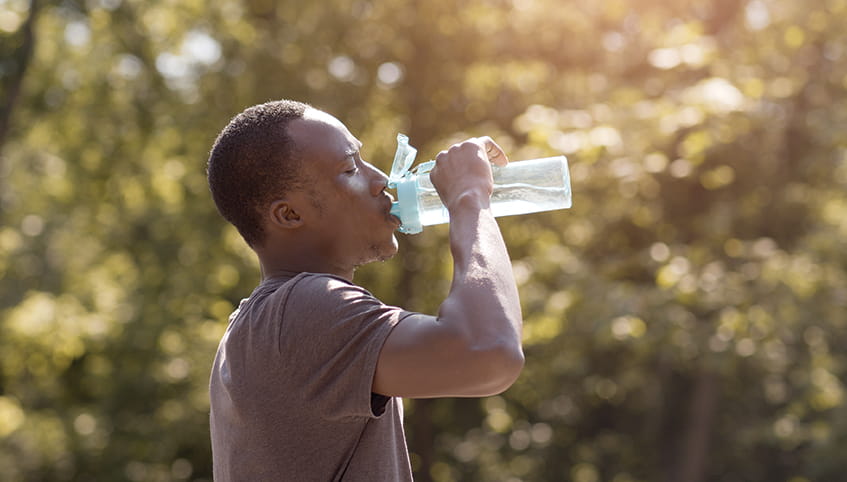
- Drink water and drink it frequently.
- Avoid energy drinks with caffeine and taurine. Avoid alcohol. These can speed up dehydration.
- Limit strenuous activities. Intense exercise can cause you to sweat more, which speeds up dehydration.
If you have underlying heart or kidney conditions, you are more susceptible to heat-related illnesses and should use extra caution.
Heat exhaustion
Signs of heat exhaustion are dehydration, muscle cramps, nausea, headache and fatigue. You know you’re getting dehydrated when the color of your urine becomes darker, you feel thirsty, have a dry mouth or feel dizzy or lightheaded.
People who are experiencing heat exhaustion become unable to tolerate the activity they were engaging in. They may not feel very hot but do have a slightly increased internal temperature.
Heatstroke
Heat exhaustion turns into heatstroke when someone’s mental status becomes impaired. They may begin to act differently, pass out, lose consciousness or show signs of confusion. If they experience heat stroke for a prolonged period it can damage the brain, kidneys and heart. If it is untreated it can result in death.
Treatment
The first step if you are experiencing any symptoms related to heat illness is to get out of the hot environment. Try to find shade, a fan or an air-conditioned building. Begin drinking water. Remove any extra layers of clothing and apply cool towels, if available. If symptoms don’t improve, visit an urgent care or emergency department.
Call 911 or seek emergency care if someone is vomiting and unable to keep water down, loses consciousness, is unresponsive or has trouble breathing.