




- Home
- News Room
- Patient Stories
- Hope in the Fight Against Alzheimer’s

July 17, 2026
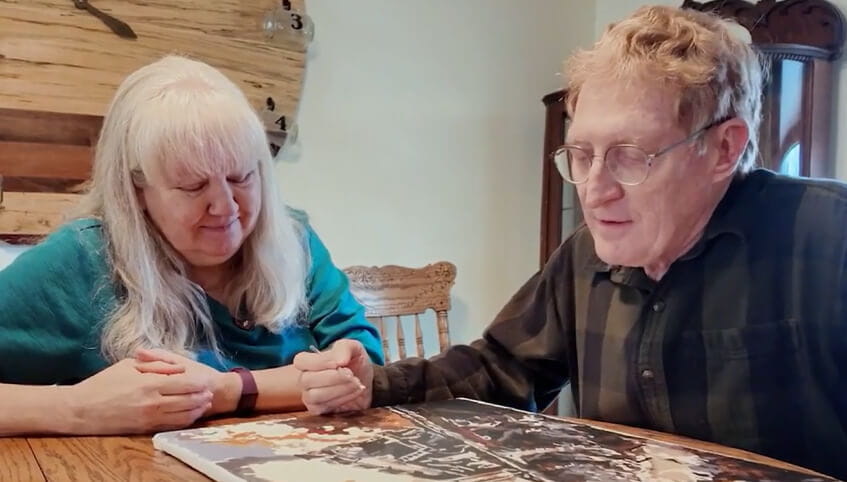
Several years ago, Brian James began noticing something was changing. His memories slipped away and familiar moments disappeared. “Remembering that I can’t remember things is annoying,” Brian said.
At 64, Brian was diagnosed with mild cognitive impairment and Alzheimer’s disease, following a family history of the disease. “My grandmother had it, my dad had it. I have it,” he said.
Yet despite the diagnosis, Brian continues to stay active, painting, walking and working. His journey also reflects a new era in Alzheimer’s care, one defined by earlier detection, promising treatments and growing hope for families facing the disease.
Earlier diagnosis, earlier treatment
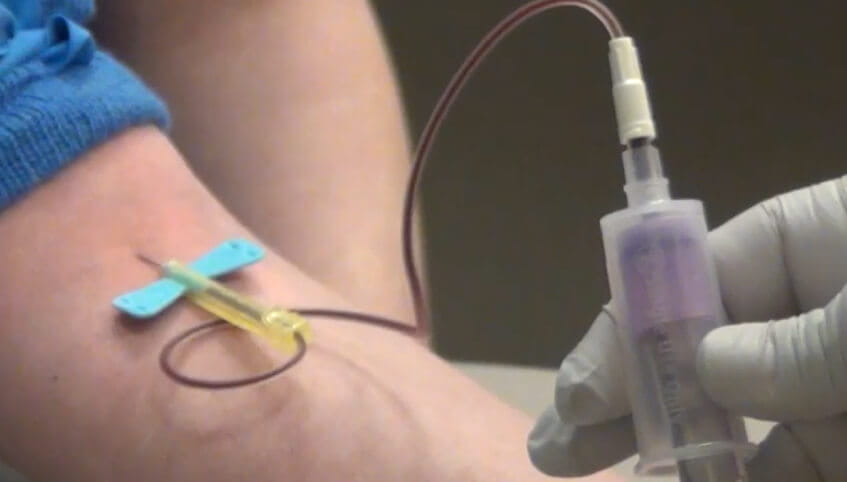
Traditionally, confirming Alzheimer’s often requires costly brain scans or invasive spinal taps. Today, researchers are developing blood tests that can provide early detection years before symptoms become severe.
“We’re now able to measure small proteins in the blood, and we feel very confident that they reflect the likelihood of whether somebody has these microscopic changes in the brain,” said neurologist Jeff Burns, MD.
Doctors believe an earlier diagnosis can lead to earlier treatment, slowing disease progression before significant damage occurs.
“Our vision for the future is to detect changes early and then prevent it,” Dr. Burns said. “We’re well on the road toward that.”
It’s a really hopeful time in the fight against Alzheimer’s” Jeff Burns, MD
A hopeful time
New FDA-approved medications for Alzheimer’s are designed to remove amyloid plaques from the brain. While the treatments are not cures, they help researchers better understand the disease and offer patients additional options.
“It’s a really hopeful time in the fight against Alzheimer’s,” Dr. Burns said. “We have new diagnostics that are changing the game. We have new drugs that are helpful, and we have more coming.”
Steps closer to answers
Scientists are also learning how lifestyle factors may influence brain health. Studies suggest exercise, healthy eating, quality sleep and social engagement can help support cognitive function.
At the same time, researchers continue to investigate why Alzheimer’s develops and how to stop it. Doctors say each new breakthrough is a step closer to answers.
“I'm constantly inspired by those who are suffering with this disease, the patients and their families. I really think together, we're going to reach a point where, at some point, Alzheimer's disease really is going to be in our rear-view mirror,” said neurologist Russell Swerdlow, MD.
For patients like Brian, the advances in the diagnosis and treatment of the disease are creating a hopeful future.
“My hope is that we can figure out what we can do about it, and maybe even learn something about how to prevent my kids from possibly following me on this path,” Brian said.

Real patient stories. Life-changing healthcare.
Choices, Hope and Science is a special 8-part series highlighting patient journeys, advancements in medicine and our dedicated clinicians partnering in treatment and recovery.