- Home
- Professionals
- Residency Programs and Fellowships
- Pharmacy Residency
- Pharmacy Residency in Kansas City
- Ambulatory Care Pharmacy Residency



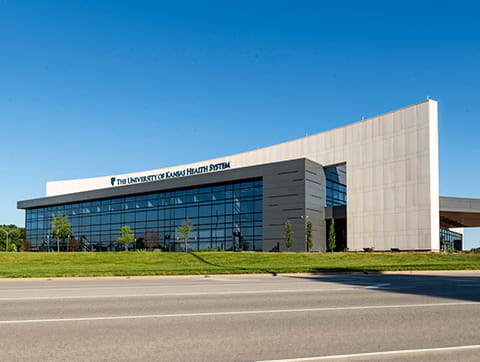
The new Quivira Ambulatory Surgery Center expands access to specialty surgical care.
Search our care options by diagnosis, treatment type or medical specialty.
Explore Specialties & Care
From common infections to rare diseases, we have the experts and leading-edge care.
Get guidance for scheduling an appointment, visiting a hospital, paying a bill and more.
Explore Patients & Visitors
Get the information you need to navigate your appointment or visit.

The postgraduate year-2 (PGY2) ambulatory care pharmacy residency at The University of Kansas Health System is designed to provide year-1 (PGY1) graduates the opportunity to accelerate growth beyond generalist practice and further the development of practice specific to the needs of ambulatory patients. The resident will have already achieved a basic level of competency commensurate with that of a PGY1 pharmacy practice resident. The PGY2 residency focuses on developing the knowledge, attitudes, training and skills necessary to cultivate pharmacists who are competent and compassionate practitioners who are prepared for a role as an ambulatory care pharmacist.
Graduates of the residency have the capability to design, implement and secure collaborative interdisciplinary practice agreements necessary for establishment and ongoing management of ambulatory practice. Graduates are empowered to treat and appropriately triage the most complex chronic and acute illnesses presented by ambulatory patients while providing care within the context of a long-term healthcare partnership with patients and healthcare providers that emphasizes health improvement and disease prevention. Completion of the PGY2 ambulatory care pharmacy residency will provide the practitioner the advanced critical thinking skills and clinical knowledge necessary to practice as an ambulatory care pharmacotherapy expert, enhance ambulatory care services as a clinical coordinator and/or share skills with others by serving as an adjunct faculty member. Moreover, program graduates will be primed for ambulatory practice leadership to serve as experts in prescribing medication.
Completion of this residency program prepares pharmacists for a wide variety of ambulatory care positions. Previous residents have taken positions as pharmacists in primary care clinics, specialty clinics such as gastroenterology, rheumatology and HIV, and assumed teaching roles with colleges of pharmacy and residency programs.
PGY2 residency programs build upon a Doctor of Pharmacy (PharmD) education and PGY1 pharmacy residency training to develop pharmacist practitioners with knowledge, skills and abilities as defined in the educational competency areas, goals and objectives for advanced practice areas. Residents who successfully complete PGY2 residency programs are prepared for advanced patient care or other specialized positions and board certification in the advanced practice area, if available.


Hometown: Hallsville, Missouri
Pharmacy School: University of Kansas City-Missouri
PGY1 Residency: University Health (Truman Medical Center)
Clinical Interests: Primary care, dermatology, rheumatology
Hobbies: Reading, trying new coffee places/restaurants, trail hiking/walking
Why I Chose The University of Kansas Health System: The University of Kansas Health System gives me the opportunity to care for patients in a variety of primary and specialty clinics, allowing me to further strengthen my skills and knowledge as an ambulatory care pharmacist. During the interview and onboarding process, everyone was so kind and welcoming! This feels like the perfect place to continue my training!
The PGY2 ambulatory care pharmacy residency is tailored to the interests and career goals of each resident. A variety of practice settings is available.
PGY2 Ambulatory Care Supplemental Manual
The PGY2 ambulatory care pharmacy residents are required to complete the following learning experiences for the coordinating durations:
Residents are required to complete two comprehensive care clinic rotations and one specialty care clinic rotation from the options listed below. All rotations are 6 weeks in length.
Click here to see full clinic description.
In comprehensive care clinics, the pharmacist evaluates the complete patient and not a specific disease or medication. While they may focus on a disease state, within their scope they provide care for majority of the patient’s diseases.
In specialty care clinics, the pharmacist provides care to patients with a focus on a specialized disease. While they may evaluate the complete patient, the focus is on a specific disease or set of diseases.
Residents will have a longitudinal clinic experience. This learning experience will be completed in one of the primary care practice sites. The resident will spend their first 6-8 week rotation in the primary care clinic (introduction to longitudinal) and will continue 1 full day per week throughout the remainder of the year.
Additional opportunities may be available based on the schedule and interests of the resident.
| Learning experience | Required vs. elective | Duration |
|---|---|---|
| Orientation | Required | 5 weeks |
| Introduction to longitudinal: primary care | Required | 6 weeks |
| Research | Required | 1 week |
| Specialty care clinic 1: multiple sclerosis | Required | 6 weeks |
| Comprehensive care clinic 1: HIV | Required | 6 weeks |
| Comprehensive care clinic 2: cardiology | Required | 6 weeks |
| Research | Required | 1 week |
| Elective specialty care clinic: allergy and immunology | Elective | 5 weeks |
| Ambulatory leadership | Required | 4 weeks |
| Elective comprehensive care clinic: cystic fibrosis | Elective | 6 weeks |
| Elective specialty care clinic: rheumatology | Elective | 6 weeks |
The PGY2 ambulatory care resident will work in The University of Kansas Health System outpatient pharmacy one of every four weekends (Saturday and Sunday), one major and one minor holiday.
National Matching Services (NMS) code: 752665
We are an equal employment opportunity employer without regard to a person’s race, color, religion, sex (including pregnancy, gender identity and sexual orientation), national origin, ancestry, age (40 or older), disability, veteran status or genetic information.