Skip Navigation

PGY1 Pharmacy Residency

The University of Kansas Health System offers a 13-month post-PharmD training program. The PGY1 pharmacy residency is an organized, directed, postgraduate training program that centers on development of the knowledge, attitudes and skills needed to pursue rational drug therapy.
Residency program purpose statement

PGY1 residency programs build upon a Doctor of Pharmacy (PharmD) education and outcomes to develop pharmacist practitioners with knowledge, skills and abilities as defined in the educational competency areas, goals and objectives. Residents who successfully complete PGY1 residency programs will be skilled in diverse patient care, practice management, leadership and education and be prepared to provide patient care, seek board certification in pharmacotherapy (i.e., BCPS), and pursue advanced education and training opportunities including postgraduate year 2 (PGY2) residencies.

PGY1 pharmacy residency program highlights

Length of program: 13 months (approximately June-July)

Number of positions: 6

PGY1 residency program required learning experiences:

  1. Orientation
  2. Acute care general selective
    Includes the following learning experiences:
    • Internal Medicine
    • Cardiology
  3. Acute care specialty selective
    Includes the following learning experiences:
    • Inpatient and outpatient hematology/oncology
    • Inpatient cystic fibrosis
    • Neonatal intensive care (NICU)
    • Neurology
    • Pediatrics
    • Perioperative/OR
    • Psychiatric pharmacy
    • Pulmonary hypertension
    • Solid organ transplant
  4. Ambulatory care selective
    Includes both comprehensive care and specialty learning experiences. See PGY2 website for list of available learning experiences.
  5. Medication use, safety and policy
    Includes foundations of drug policy, drug information, pharmacy and therapeutics committee, medication safety, quality outcomes and compliance.
  6. Introduction to administration
  7. Research (longitudinal)
    PGY1 residents participate in leading 2 research projects throughout the year. Through the reversed model, PGY1 residents complete data collection/analysis and develop a poster and manuscript in the first 6 months of the program for a research project that was developed by a previous PGY1 resident. Starting in January of the residency year, PGY1 residents will develop a research question and design a research project by the end of the residency year that will be passed to the incoming PGY1 class.
  8. Service commitment (longitudinal)
    PGY1 residents staff clinical pharmacist shifts approximately every other weekend through January and then approximately every fourth weekend from January to June of the residency year. All weekend shifts are decentralized clinical pharmacist shifts with direct patient care responsibilities. Clinical care teams PGY1 resident staff are reevaluated each residency year. They currently include cardiology, pediatrics, internal medicine and/or surgery, and the PGY1 resident joins one team for the entire year.
  9. Presentations: Grand rounds and leadership topic discussion
    PGY1 residents will present 1 45-minute and 1 60-minute pharmacy grand rounds presentations throughout the year. The 60-minute presentation includes offering continuing education credit for pharmacists. Additionally, PGY1 residents moderate and lead 1 leadership topic discussion throughout the year as part of a leadership book club series.

PGY1 Pharmacy program specific elective learning experiences

  1. Critical care selective
  2. Advanced independent practice (AIP)
  3. 3 general electives (1 must be in direct patient care setting)

PGY1/2 MUSP program specific elective learning experiences for PGY1 year

  1. Advanced medication use, safety and policy
  2. Critical care selective
  3. Advanced independent practice (AIP)
  4. 2 general electives (1 must be in direct patient care setting)

PGY1/2 HSPAL program specific elective learning experiences for PGY1 year

  1. Advanced administration
  2. Leadership expansion
  3. Transitions of care
  4. 1 general elective in direct patient care setting

Elective learning experiences

The following learning experiences are considered elective options, but some may be required or specific to a particular PGY1 track. Additionally, learning experiences included above in required selective learning experiences may be selected as elective options.

  1. Advanced administration
  2. Advanced heart failure
  3. Advanced independent practice (AIP)
  4. 2-week experience following a blocked learning experience in an acute care setting where the resident is the assigned pharmacist for the clinical team. This learning experience is scheduled after December of the residency year.
  5. Advanced medication use safety and policy
  6. Antimicrobial stewardship/Infectious diseases
  7. Chief PGY1 resident (longitudinal) *Application required
  8. This elective longitudinal learning experience takes place from January to July of the PGY1 residency year. The primary focus is to gain experience with residency program administration as well as developing and improving leadership skills of the resident.
  9. Critical care selective
  10. Includes the following learning experiences:
    • Medical ICU
    • Neurosurgery ICU
    • Surgical/trauma ICU
  11. Emergency Department
  12. Leadership expansion
  13. Final learning experience of PGY1 year for PGY1/2 HSPAL residents in the residents’ PGY2 longitudinal management area.
  14. Palliative care services
  15. Pharmacy informatics
  16. Pharmacy practice management
  17. Toxicology (Poison Center)
  18. Transitions of care

Teaching certificate

PGY1 residents have the option to participate in the University of Kansas School of Pharmacy Resident Teaching Certificate.

Benefits

  • Annual salary: $52,000
  • Benefits include PTO, paid holidays and other benefits provided to health system employees
  • View more information

Program manuals

Informational sessions

  • Virtual recruitment events will be held in the fall. Details and links to these events can be found on our social media accounts (below) or by emailing the program contacts.

Application requirements

PhORCAS residency program application

  • Letter of intent
  • Curriculum vitae
  • College transcripts
  • 3 letters of recommendation
  • Supplemental materials as outlined in the ASHP residency program directory

Deadlines

  • All application materials must be received via PhORCAS by due date listed on ASHP residency program directory.
  • Must have a valid pharmacy license in the state of Kansas within 90 days of the start of residency.

National matching services (NMS) code: 143313

We are an equal employment opportunity employer without regard to a person’s race, color, religion, sex (including pregnancy, gender identity and sexual orientation), national origin, ancestry, age (40 or older), disability, veteran status or genetic information.
Contact us

The University of Kansas Health System
Pharmacy
4000 Cambridge St., Mailstop 4040
Kansas City, KS 66160
Sarah Mester

PGY1 Pharmacy residency program director

Sarah Mester, PharmD, MS, BCPS (she/her/hers)

Lindsey Fitzpatrick

PGY1 Pharmacy residency program coordinator

Lindsey Fitzpatrick, PharmD, BCPS (she/her/hers)

Meet our residents

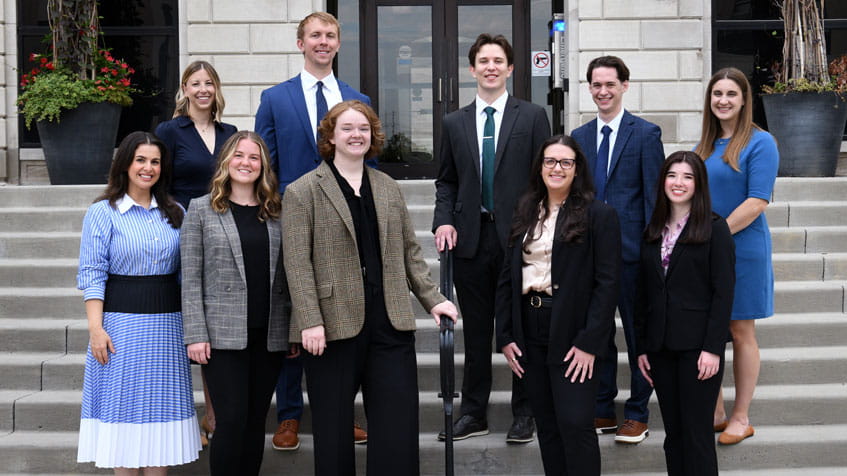
Pharmacy Residency group

Megan Callahan

Hometown: Houston, Texas

Pharmacy school: The University of Texas at Austin College of Pharmacy

Clinical staffing area: Pediatrics

Research project title: Effect of Obesity on Incidence and Severity of Neurotoxicity in Patients Receiving Arsenic Trioxide for Acute Promyelocytic Leukemia

Areas of interest: Oncology and women's health

Why I chose The University of Kansas Health System: Having lived in Texas most of my life, I was excited for the chance to explore a new city and care for a different patient population. I was drawn to this program because it's a large academic medical center with great opportunities to teach and precept. I also loved that we have the opportunity to staff in a clinical area. What stood out to me the most was how welcoming and supportive everyone was. From the residents I met at midyear to the faculty during interviews, it was clear that this is a place where people are passionate about their work and truly invested in helping each resident grow.

Elizabeth Carter

Elizabeth Carter, PharmD (she/her/hers)

Hometown: Kingman, Kansas

Pharmacy school: University of Kansas School of Pharmacy

PGY1 program: The University of Kansas Health System

Clinical interests: toxicology, burn, and resuscitation

Hobbies: baking, reading, finding new local restaurants and shops to support!

Why I chose The University of Kansas Health System: I chose to complete my PGY2 in critical care at the health system for several reasons. First, the level of care provided at our institution is truly world-class. As a large, academic medical center, we have the capability to care for some of the most complex and critically ill patients in the region. This provides residents with unparalleled learning opportunities and exposure to a wide range of disease states and advanced therapies. This environment allows residents to learn not only from challenging clinical cases, but also from some of the most talented clinicians in the Midwest. Equally important, the critical care pharmacy team fosters a culture of support, collaboration and excellence. The team is truly a family, with exceptional leaders, preceptors and mentors who are deeply invested in resident growth and success.

Fun fact: I started college on a vocal music scholarship!

Ryley Elsea

Hometown: Wichita, Kansas

Pharmacy school: University of Kansas

Clinical staffing area: Pediatrics

Research project title: Evaluating Incidence of Immune Effector Cell-Associated HLH (IEC-HLH) Across CAR T and BiTE Therapies and Treatment Outcomes with Anakinra, Ruxolitinib and Emapalumab

Areas of interest: Oncology, solid organ transplant

Why I chose The University of Kansas Health System: Having the opportunity to rotate through the health system as a student, I was able to see and learn so much from my preceptors in highly specialized areas and always felt like I was part of the team. Coming into residency, I knew I wanted to continue being challenged clinically and personally in an environment that felt safe and encouraging for learners, and being an academic medical center, the health system felt like the perfect place for me. The learning experiences and opportunities in the health system are endless, which gives me the chance to broaden my clinical knowledge in a way that is unrivaled by many programs.

Kailey Gill

Hometown: Norton, Kansas

Pharmacy school: University of Kansas School of Pharmacy

Clinical staffing area: Internal medicine

Research project title: Efficacy and Safety of Low-Dose Anti-Thymocyte Globulin Compared to Moderate-Dose Anti-Thymocyte Globulin for Induction Therapy in Kidney Transplantation

Areas of interest: Transplant, infectious diseases

Why I chose The University of Kansas Health System: I chose the health system because I was looking for a program that offered a wide variety of rotations with clinically complex patients that matched my interests. I wanted to complete a residency at a large academic medical center where I would be challenged but also supported by preceptors who are invested in teaching. What stood out to me was the strong learning environment, the ability to work on meaningful research and how valued pharmacists are on the care team. This program felt like the right place to grow both professionally and personally during my residency year.

Olivia Lopez

Hometown: Shawnee, Kansas

Pharmacy school: University of Kansas School of Pharmacy

Clinical staffing area: Cardiology

Research project title: Evaluation of the Safety and Efficacy of Antimotility Agents in Patients with Clostridium Difficile Infection

Areas of interest: Cardiology, critical care, internal medicine

Why I chose The University of Kansas Health System: As a student, I had the opportunity to complete APPE rotations through The University of Kansas Health System. I was able to collaborate with knowledgeable preceptors and be a part of multidisciplinary teams that were supportive and encouraging toward learners. While I was searching for residency programs, I constantly found myself comparing each program to my experiences at this health system. Being a large academic medical center, there are ample amounts of learning opportunities available to residents. I felt like this program would be the best fit for my interests and would help shape me into a well-rounded pharmacist through its challenging learning experiences and meaningful projects.

Lauren Rihanek

Lauren Rihanek, PharmD, PGY2

Hometown: Omaha, Nebraska

Pharmacy school: South Dakota State University

PGY1: The University of Kansas Health System

Practice/Research interests: Antimicrobial resistance, tickborne illnesses, antimicrobial stewardship, academia

Hobbies: Calligraphy, trying new coffee shops, playing darts and listening to music

Why I chose The University of Kansas Health System: I chose the health system because I wanted an environment that would both support and challenge me as I continue to grow as an infectious diseases pharmacist. As a PGY1 resident, I experienced firsthand the strong sense of community within the infectious diseases team whose pharmacists were invested in my learning and encouraged my clinical growth. The opportunity to work alongside these dedicated pharmacists, participate in antimicrobial stewardship efforts and manage patients with complex infections made it clear that this program would provide me the mentorship and experiences I am seeking to become a well-rounded infectious diseases pharmacist.

Related links