


- Home
- News Room
- Patient Stories
- Battling Back After Brain Injuries

August 26, 2026
In brain injuries, minutes matter, outcomes are uncertain and recovery can take months or years.
For Kendall Forbes and Glenn Hopper, life-threatening neurological emergencies put them in the hands of specialists at The University of Kansas Health System.
One arrived after a violent crash with one of the lowest neurological scores possible. The other suffered a brain bleed that became so dangerous surgeons removed part of his skull to save his life.
Remarkable recovery
Kendall Forbes was driving back to Pittsburg State University for her senior year when a suspected drunk driver hit her vehicle, ejecting her from the car. Airlifted to The University of Kansas Health System, she arrived with a host of severe injuries.
Trauma surgeons, critical care specialists, plastic surgeons and other experts immediately went to work. "We felt like we had the whole hospital taking care of her," said her father, PJ Forbes.
Her condition was critical. Among Kendall's most serious injuries was a diffuse axonal injury, a type of traumatic brain injury caused by the brain moving and twisting inside the skull during a violent impact. She scored a 3 on the Glasgow Coma Scale, the lowest possible score and a sign of severe neurological injury.
After 8 days in a coma, Kendall began a long rehabilitation process. She spent weeks relearning basic skills and rebuilding strength.
“The hard part about brain injuries is that there is no such thing as a typical recovery,” said acute care surgeon and medical director for trauma Stepheny Berry, MD. “Kendall’s recovery has been quite remarkable.”
Kendall said she approached rehabilitation with the determination of a college athlete. "I turned everything into a game in my head," she said. "Let's see how many steps we can walk today."
"Kendall has been very hopeful and very persistent in her rehabilitation," physical medicine and rehabilitation specialist Alexandra Arickx, MD, said. “She continues to make progress each and every day, and that’s what we hope for people after they’ve had a severe brain injury.”
Months later, Kendall has returned to batting practice and hopes to finish her senior year back on the softball field.
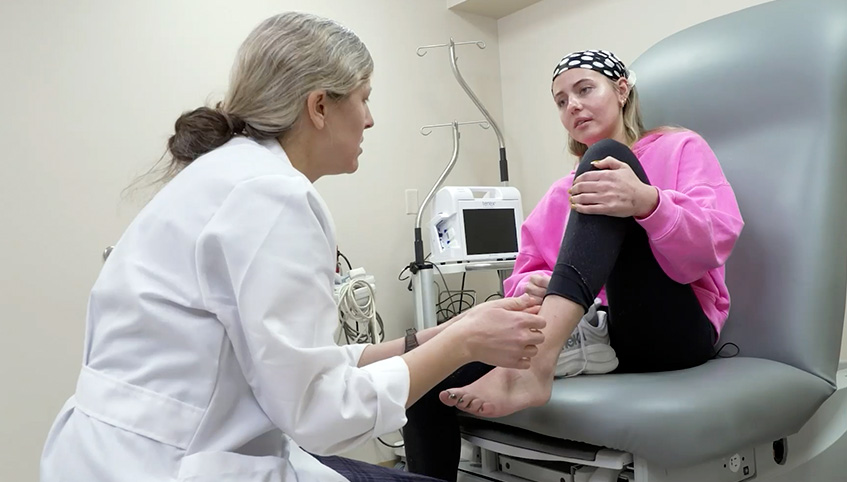
It is equally important to take care of a stroke survivor’s mental health along with the physical symptoms.” Dipika Aggarwal, MD
Finding inspiration after injury
Glenn Hopper’s medical emergency began in the hospital parking garage while visiting his wife, who was recovering from a routine procedure.
"All of a sudden, it was like my left leg wasn't moving properly," Glenn recalled.
Recognizing something was wrong, he called 911. Within minutes, emergency teams brought him to the emergency department, where scans revealed a hemorrhagic stroke caused by bleeding directly into his brain tissue.
"The issue is that brain sits in the skull and there's not a lot of room for the brain to expand," said neurologist Rohan Joshi, MD. “If swelling and pressure go up, it can lead to progressive neurologic defect.”
Glenn’s condition initially stabilized but then swelling inside his skull continued to increase. Doctors performed a decompressive craniectomy, removing a portion of Glenn’s skull to relieve pressure and protect healthy brain tissue.
"The answer was to relieve the pressure, protect the whole brain and give it some time," said clinical service chief of neurosurgery Roukoz Chamoun, MD. Glenn's recovery included additional complications, months of rehabilitation and a second surgery. Throughout the process, he found inspiration in neurologist and stroke survivor Dipika Aggarwal, MD.
“I saw a video of her during rehab, and it stuck with me that I can do this too,” Glenn said. “She highlighted the mental aspect of recovery and I realized that I have to be able to fight and do this.”
“In my personal experience, it is equally important to take care of a stroke survivor’s mental health along with the physical symptoms. Neuropsychiatric complications of stroke are largely unrecognized and undertreated, and can be disabling.” Dr. Aggarwal said.
The power of team-based care
Though their diagnoses were very different, Kendall and Glenn benefited from the same approach: rapid intervention, multidisciplinary expertise and intensive rehabilitation.
From trauma surgeons and critical care teams to neurologists, rehabilitation specialists and therapists, dozens of clinicians played a role in their recoveries. As Dr. Berry put it, "Trauma is the ultimate team sport."
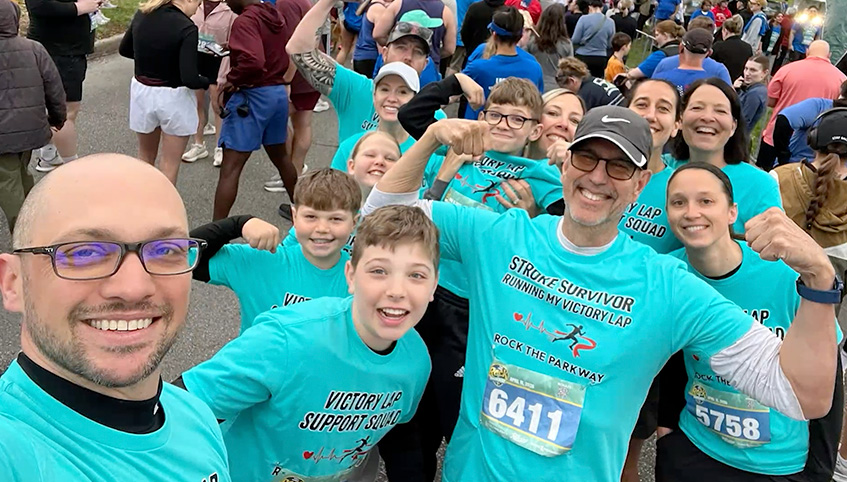
Today, Kendall is pursuing a return to softball, and Glenn is back to running 5Ks. Their recoveries are a reminder of how advanced medicine, coordinated care and patient determination can turn devastating diagnoses into stories of hope.

Real patient stories. Life-changing healthcare.
Choices, Hope and Science is a special 8-part series highlighting patient journeys, advancements in medicine and our dedicated clinicians partnering in treatment and recovery.