- Home
- Conditions and Care
- Conditions
- Sjogren's Disease



The new Quivira Ambulatory Surgery Center expands access to specialty surgical care.
Search our care options by diagnosis, treatment type or medical specialty.
Explore Specialties & Care
From common infections to rare diseases, we have the experts and leading-edge care.
Get guidance for scheduling an appointment, visiting a hospital, paying a bill and more.
Explore Patients & Visitors
Get the information you need to navigate your appointment or visit.
The University of Kansas Health System offers one of the nation's only dedicated multidisciplinary care programs to treat and advance care for Sjogren's disease, a relatively common autoimmune rheumatological disorder. As part of an academic medical center, we’re also part of the most up-to-date ongoing research and offer the latest treatments available through access to clinical trials.
Sjogren's disease is characterized by a wide variety of symptoms including the presence of dry eyes and mouth, musculoskeletal pain and fatigue. This disease can occasionally be life-threatening and requires aggressive therapy in order to prevent damage to vital organs in the body.
During evaluation for Sjogren's disease, particularly during initial screenings, patients are classified according to the level of severity of symptoms, signs, abnormal labs and the potential future risk of developing serious complications such as interstitial lung disease and lymphoma.
We offer a variety of appointment types. Learn more or call 913-588-1227 to schedule now.
Sjogren's disease typically affects people between the ages of 45 and 55 and is more common in women. Symptoms may include:
A wide variety of autoimmune disorders can coexist with Sjogren's, including systemic lupus erythematosus (SLE) and scleroderma. The disease can coexist with other organ-specific disorders such as Hashimoto thyroiditis, primary biliary cholangitis and celiac disease.
Because of the nature of this disorder and the relatively new clinical focus to understand and treat the condition, it's important to choose a dedicated multidisciplinary program within an academic medical setting like ours.
Diagnosis for Sjogren's disease begins with laboratory tests. Most patients suspected to have Sjogren's require a minor salivary gland biopsy, which is a simple procedure performed by an otolaryngologist. Some patients may require additional testing such as imaging or nerve conduction studies.
Treatment for Sjogren's disease depends on symptoms present at the time of diagnosis. Some patients only require monitoring while others may need aggressive treatments to halt the progression of the disease and potentially prevent or mitigate life-threatening complications.
Due to the fact that Sjogren's can lead to life-threatening complications involving the lungs, kidneys and other vital body organs, aggressive therapeutic options such as cyclophosphamide, rituximab and other biological therapies may be needed. Traditional disease-modifying antirheumatic drugs (DMARDs) such as methotrexate, azathioprine and mycophenolate mofetil can be helpful in managing a wide variety of symptoms. Variable doses of corticosteroids (such as prednisone) may also be needed in the short to medium term.
Management of Sjogren's disease focuses on controlling symptoms and at the same time calming the immune attack. There is really no outright cure yet, but we aim to improve the quality of life and at the same time try to prevent complications.
For the dryness, we use a lot of supportive measures for dry eyes. For example, patients use artificial tears or lubricating eye drops frequently. There are even prescription eye drops, like the one containing different concentration of cyclosporine that reduce eye inflammation and help you produce more tears.
For the dry mouth, we encourage staying hydrated, chewing sugar-free gums and lozenges to stimulate with the goal of stimulating saliva basically. And we have medications like pilocarpine or cevimeline that can stimulate the salivary glands to produce more saliva. Good oral hygiene and regular dentist visits would be super important here obviously, also dry mouth can be quite rough on the teeth, as highlighted in the case of Jane. So we try to prevent cavities early on with fluoride treatments.
Now, beyond moisture replacement, we often use immunomodulatory therapies such as hydroxychloroquine, a famous drug. It's actually a malaria drug, but it is also immune system-altering, it has autoimmune or immune system-altering properties. It can help with fatigue. It can help with joint pain, rashes. With this drug is it's sort of like tamps down the overactive immune system, if you will. It's not a miracle drug I have to highlight here, but many patients do benefit from it. Indeed, if a patient has more severe disease, let's say lung involvement or kidney inflammation, then we might use stronger immunosuppressants, and those could include drugs like methotrexate, azathioprine, sometimes with steroids, corticosteroids like prednisone.
And in certain cases, we even use biological therapies such as, for example, rituximab, especially if the disease is affecting organs in a serious manner or causing a lot of systemic problems.
Overall, what's working best these days is a personalized combination approach. We address the dryness with local treatments and lifestyle changes, and at the same time address the immune system activity or overactivity with immune-altering medications if needed. And overall, I would say that by tailoring the treatment to each patient's particular set of symptoms and problems, we can usually get patients to feel reasonably better. It's all about managing Sjogren’s as a marathon, really, rather than a sprint. It's through ongoing care, monitoring and adjusting treatment as we go.
The University of Kansas Health System is proud to have 1 of only a handful of specialized programs in the U.S. dedicated to care and research for Sjogren's disease. We are proud to be one of the dedicated destinations that strives to provide the best care possible for patients and offers the option of being part of clinical trials, aiming to develop effective therapies for Sjogren's disease and other complex diseases and hard-to-treat cases.
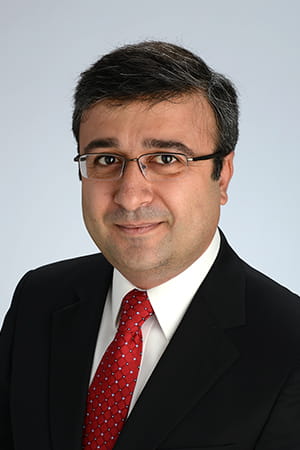
I think, without any doubt, Sjogren’s demands a team effort. In our clinic, the rheumatologist, that is me, might be coordinating the care, and as we rely on other providers, with other specialties.
So an ophthalmologist, for example, is crucial for the management of dry-eye symptoms, but also for other aspects of the care, checking for damage of the cornea, for example. Ophthalmologists can prescribe special treatments like the medicated drops or even procedures like the punctal plugs. And these are the little plugs in the tear duct that help keep the tears in your eyes longer.
We also involve the patient's dentist, as they do help patients combat dry mouth, treat fungal infections of the mouth, and generally save as many teeth as possible.
We also work closely with an ENT physician, that's an ear, nose and throat specialist, and what they do is they actually help us quite a bit with a lip biopsy to confirm the diagnosis, but also to manage enlarged salivary glands and chronic sinus issues of dryness.
If the patient has, let's say, lung involvement, the pulmonologist or lung specialist would be consulted here. The same case, if you have kidney involvement, you bring in a nephrologist. Neuropathies or nervous system involvement would sometimes require consulting with a neurologist. So we all collaborate with other specialists in order to optimize patient's care.
And then finally, I should highlight that mental care can be an important aspect. This is a chronic illness that can be tough emotionally on the patients. So sometimes psychologists and counselors can be quite helpful and contribute to patients' care. So yes, it's truly multidisciplinary approach, as each specialist addresses a different piece of the puzzle, and together, we can try to improve care and cover all the bases basically.
To make an appointment, call 913-588-1227.
To refer a patient, call 913-588-5862.
This disease is approached by the collaboration of different providers of several specialties. Patients are frequently seen by rheumatologists, ophthalmologists, otolaryngologists (ear, nose and throat), pulmonologists, neurologists and other providers.